
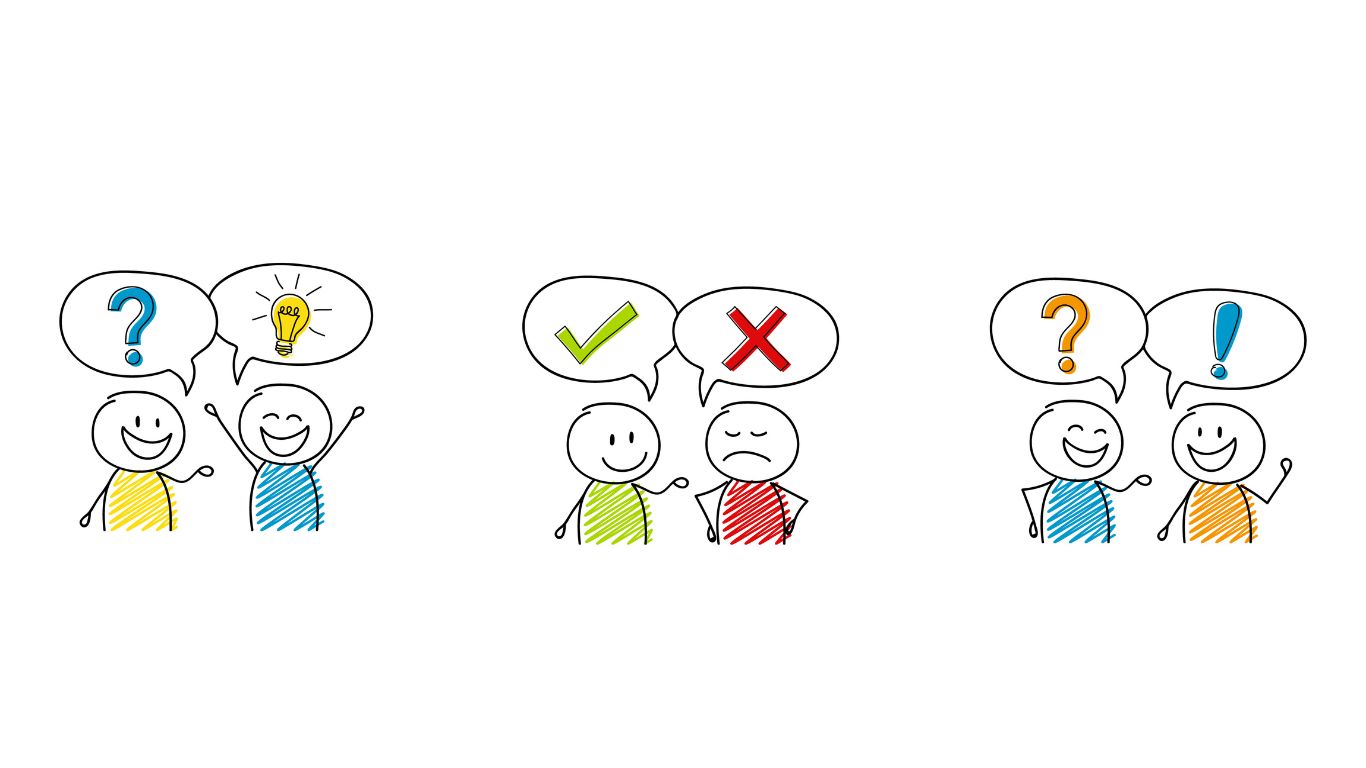
The Power of a Good Question
Welcome to the new year! It is odd, though inspiring, that many, if not most of us are ready to have a shift in our lives at the beginning of each new calendar year. I love our optimism!
I have a wonderful practice to suggest as we begin unfolding the new year. Many of us have people in our lives—family, friends, colleagues, etc.—that we are nervous about speaking to, maybe for political reasons, or that we seem stuck in a loop of negativity, even when we mean well. I’d like you to consider the power of the open-ended question.
When We Think We Know
I’ve noticed that what gets me in trouble more quickly than anything else is to think I know what someone is talking about. My annoyance arrives so fast I don’t feel it arrive, especially if they are trying to point something out to me. It almost happened this morning, though my husband and I have gotten fairly savvy about our conversations.
I was about to head out to walk one of my terriers, and he was concerned about the moderately high air quality. Instead of telling me I shouldn’t go, he told me his concerns and then asked a great question that really made me think about his warning. He asked if I was worried about long-term exposure to particulates in the air. I could honestly say no, not this foggy morning, as I’ve noticed that when it is foggy, our air quality registers higher than I think it really is. We looked it up, and that turns out to be true! And if it had not been, I might have considered staying home. My question to him was, what if the fog is causing the high readings you are seeing?
What made that a good question is that neither of us knew the answer, so we had a classic open-ended question. And we both learned something.
Letting Curiosity Lead
So what makes a great open-ended question? It is something you could not possibly know the answer to. For instance, if someone is describing an issue they are struggling with, asking them if they think their childhood might be to blame is too leading. Rather, asking, “Has this ever happened before?” is a cleaner, more neutral question that allows the person who is struggling to look from a different point of view and come to their own new insight. And what we always want to help people do is find their own wisdom.
An open-ended question is not a suggestion about what they should do, couched as a question! (Have you read this book, heard this podcast, etc.) Rather, try asking them what they have tried, and how it might have worked. On occasion you might actually know what would be helpful to them, but it will NEVER go well if you directly give them that advice. People want to feel that they are able to sort things out on their own. Questions are a terrific way to help them do that, and it keeps you from annoying the other person. By the way, you need to be truly curious for this to work!
Try this out and let me know how it goes.
If this spoke to you, I explore a related idea in The Power of Pausing.